 Skip to content
Why the Marrakech to Fes Desert Tour Is One of Morocco Most Iconic Journeys
A 3-day tour from Marrakech to Fes via the Sahara Desert is widely considered one of the most spectacular travel routes in Morocco. It’s not just a transfer between two cities; it’s a journey through dramatic landscapes, ancient villages, and centuries of cultural heritage. Travelers who take this route experience the heart of Morocco in a way that no quick flight or train ride could ever provide. Imagine starting your morning in the bustling souks of Marrakech and ending a night under a blanket of stars in the Sahara—this is exactly the kind of magic this tour offers.
One of the biggest reasons this route is so popular is the incredible diversity of scenery. Within three days, you travel across the High Atlas Mountains, pass through cinematic kasbahs, explore lush valleys filled with palm trees, and finally arrive at the golden dunes of the Erg Chebbi Desert near Merzouga. According to Morocco’s tourism statistics, desert tours are among the top experiences for international visitors, with the Marrakech-to-Fes route ranking among the most booked itineraries each year.
Beyond the landscapes, the journey is deeply cultural. Along the way, travelers meet Berber communities, taste traditional Moroccan cuisine, and learn about the region’s ancient caravan trade routes. Many villages along the route were historically important stops for traders crossing the Sahara with gold, spices, and textiles. Today, these same routes welcome curious travelers eager to experience Morocco beyond its cities.
Another reason this tour stands out is the unique pace of adventure. Instead of rushing from place to place, the journey unfolds gradually. Each stop—from mountain passes to desert camps—adds another layer to the experience. By the time travelers reach Fes, they feel as though they’ve traveled not only across Morocco but also through time.
For anyone looking to combine adventure, culture, nature, and unforgettable desert landscapes, the Marrakech to Fes 3-day desert tour is easily one of the most rewarding experiences Morocco has to offer.
Overview of the 3-Day Marrakech to Fes Desert Itinerary
Planning a 3-day desert tour from Marrakech to Fes might sound complicated at first, but the itinerary is surprisingly well structured. Over the course of three days, travelers cross more than 500 kilometers of Morocco’s most diverse landscapes, moving from the vibrant Red City of Marrakech to the spiritual and cultural capital of Fes. Each day brings a completely different environment, making the journey feel like several trips combined into one unforgettable adventure.
The tour is carefully designed to balance travel time, sightseeing, and unique experiences. Instead of spending endless hours in a vehicle, the route includes scenic stops at historical sites, dramatic natural formations, and traditional villages. This allows travelers to stretch their legs, take photographs, and truly appreciate the landscapes that make Morocco so unique.
One of the highlights of this itinerary is the chance to explore UNESCO World Heritage Sites, such as the famous Ait Ben Haddou Kasbah, which has appeared in films like Gladiator and Game of Thrones. Another major highlight is the overnight stay in the Sahara Desert, where travelers ride camels across towering sand dunes before spending the night in a traditional desert camp. Few travel experiences can match the feeling of sitting by a campfire in the middle of the Sahara while listening to Berber music under a sky full of stars.
The final day offers a completely different atmosphere as the landscape transitions from desert to forests and mountains. Travelers pass through the Ziz Valley, known for its endless palm groves, before reaching the cedar forests of the Middle Atlas Mountains. Here, wild Barbary macaques sometimes greet visitors along the roadside, adding an unexpected wildlife encounter to the trip.
Here is a simplified overview of the journey:
| Day | Route | Highlights |
|---|---|---|
| Day 1 | Marrakech → Dades Valley | Atlas Mountains, Ait Ben Haddou, Ouarzazate |
| Day 2 | Dades Valley → Merzouga | Todra Gorge, camel trek, Sahara camp |
| Day 3 | Merzouga → Fes | Ziz Valley, Cedar Forest, Azrou |
This carefully planned route ensures that travelers experience mountains, valleys, deserts, and forests all in just three days—something very few travel itineraries in the world can offer.
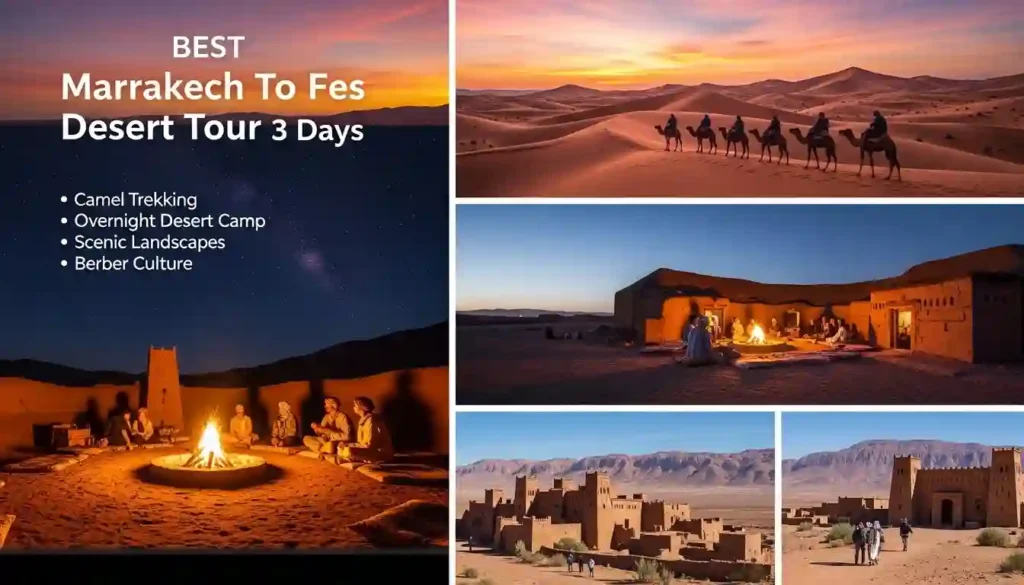
Day 1 – Marrakech to Dades Valley via the High Atlas Mountains
The first day of the Marrakech to Fes desert tour sets the tone for the entire adventure. Early in the morning, travelers leave behind the lively chaos of Marrakech and begin the journey toward the towering peaks of the High Atlas Mountains. The change in scenery happens surprisingly quickly. Within an hour of leaving the city, the flat plains give way to winding mountain roads, dramatic cliffs, and picturesque Berber villages clinging to the hillsides.
The drive across the Atlas Mountains is an experience in itself. The road climbs higher and higher until it reaches the famous Tizi n’Tichka Pass, which sits at around 2,260 meters (7,415 feet) above sea level. From the top, travelers are rewarded with breathtaking panoramic views of the surrounding valleys and mountain ranges. On clear days, the scenery feels almost surreal, with layers of mountains fading into the horizon.
Along the way, small roadside markets often appear where local Berber families sell handmade crafts, argan oil products, and traditional rugs. These stops provide a chance to interact with locals and gain insight into life in Morocco’s mountain communities. Many of these villages have remained largely unchanged for generations, preserving traditions that date back hundreds of years.
After descending from the mountains, the journey continues toward one of Morocco’s most famous landmarks: Ait Ben Haddou. This ancient fortified village, built from clay and mud brick, looks like something straight out of a movie set. In fact, it has served exactly that purpose in dozens of international films and television series. Walking through its narrow alleys feels like stepping back into the 17th century.
The day continues through Ouarzazate, often called the “Hollywood of Morocco,” before heading toward the beautiful Dades Valley. Known as the “Valley of a Thousand Kasbahs,” this region is filled with dramatic rock formations and historic fortresses. As the sun begins to set, travelers finally arrive at their hotel or guesthouse, where a traditional Moroccan dinner awaits.
After a long but unforgettable day, the peaceful atmosphere of the valley provides the perfect place to rest before the desert adventure truly begins.
Crossing the Tizi n’Tichka Pass
The Tizi n’Tichka Pass is one of the most breathtaking mountain roads in North Africa and a highlight of the Marrakech to Fes desert route. Stretching across the High Atlas Mountains, this pass connects the bustling city of Marrakech with the remote landscapes of southern Morocco. At over 2,200 meters above sea level, it is the highest major mountain pass in the country and offers some of the most dramatic views travelers will encounter during the journey.
Driving through the pass feels like navigating a giant natural sculpture. The road twists and turns along steep cliffs, revealing new vistas at nearly every corner. Deep valleys, rugged peaks, and terraced hillsides create a constantly changing landscape that keeps travelers glued to their windows. Photographers especially love this part of the journey because the lighting and colors of the mountains shift throughout the day, creating stunning contrasts between red rock, green vegetation, and bright blue sky.
The region is also home to many traditional Berber villages, where life moves at a slower, more traditional pace. Houses here are often built from local clay and stone, blending seamlessly into the surrounding mountains. From a distance, entire villages appear almost camouflaged against the hillsides. This architectural style isn’t just beautiful—it also helps regulate temperature in the harsh mountain climate.
Local markets sometimes appear along the roadside, offering handmade carpets, pottery, and locally produced argan oil, one of Morocco’s most famous natural products. Stopping at these markets allows travelers to support local artisans while learning more about traditional craftsmanship that has been passed down through generations.
Weather in the Tizi n’Tichka region can also be surprisingly diverse. In winter, snow occasionally covers the mountain peaks, creating a striking contrast with the desert landscapes that lie further south. In spring and early summer, wildflowers bloom across the hillsides, adding vibrant color to the already spectacular scenery.
Crossing this pass isn’t simply about getting from one place to another—it’s a memorable introduction to Morocco’s natural beauty and cultural richness. By the time travelers descend toward the desert plains, they already feel immersed in a completely different world.
Visiting the Legendary Ait Ben Haddou Kasbah
No Marrakech to Fes desert tour is complete without a stop at Ait Ben Haddou, one of Morocco’s most iconic landmarks. This fortified village, or kasbah, dates back to the 17th century and is a UNESCO World Heritage Site, representing the pinnacle of southern Moroccan earthen architecture. With its sun-baked walls, narrow winding alleys, and strategically placed towers, Ait Ben Haddou looks like a scene lifted straight out of a historical epic. In fact, it has served as a filming location for Hollywood blockbusters like Gladiator, Kingdom of Heaven, and even the popular series Game of Thrones.
Walking through Ait Ben Haddou is like stepping back in time. The streets are narrow and uneven, flanked by mud-brick houses that have been maintained over centuries. Local families still inhabit parts of the kasbah, giving visitors a glimpse of traditional Moroccan life that has barely changed over generations. Photographers, travelers, and history enthusiasts often spend hours exploring, fascinated by the contrast between ancient architecture and the modern world outside.
One of the most striking features of Ait Ben Haddou is the way it interacts with the surrounding landscape. Nestled along a hill, the kasbah overlooks a river valley, with olive groves and arid hills stretching into the distance. The lighting at sunrise and sunset makes the adobe walls glow in golden hues, creating the perfect backdrop for photography or simply soaking in the scenery. Local guides are often available to provide historical context, sharing stories about how the kasbah functioned as a hub for caravans transporting salt, gold, and spices across the Sahara.
Visitors can also experience a taste of traditional Berber hospitality. Many of the nearby restaurants serve freshly made tagines, couscous, and mint tea, allowing travelers to enjoy a meal while taking in panoramic views of the kasbah and valley. Sampling local cuisine adds another sensory layer to the visit, making the stop not just visually stunning but culturally enriching as well.
Ait Ben Haddou isn’t just a photo opportunity; it’s a living example of Morocco’s history, resilience, and architectural ingenuity. Experiencing it firsthand gives travelers a deeper appreciation for the cultural and natural diversity that defines the Marrakech to Fes desert route.
Exploring Ouarzazate and the Valley of Roses
After leaving Ait Ben Haddou, the journey continues to Ouarzazate, often referred to as the “Hollywood of Africa.” This city has become synonymous with Moroccan cinema, hosting some of the largest film studios on the continent, including Atlas Studios. Many epic films and TV series have been shot here, taking advantage of the unique desert landscapes, dramatic mountain backdrops, and ancient kasbahs. Travelers interested in film history will find it fascinating to explore the studios, which often offer guided tours showcasing sets, props, and behind-the-scenes stories from famous productions.
Ouarzazate itself is a charming city with a relaxed desert atmosphere. The local souks offer everything from traditional carpets and pottery to jewelry and leather goods, providing travelers with a chance to shop for authentic Moroccan souvenirs. The city also has several historic kasbahs, such as Taourirt Kasbah, which illustrate the architectural styles of southern Morocco and the ingenuity required to thrive in the arid environment.
From Ouarzazate, the road winds through the Dades Valley, famously known as the Valley of a Thousand Kasbahs. This region is a visual feast of red-rock formations, palm groves, and terraced villages. Driving through the valley, travelers encounter dramatic cliffs and unusual rock formations, including the famous “Monkey Fingers” cliffs near Dades Gorge. The valley is especially beautiful in the late afternoon when the setting sun casts warm hues across the landscape.
A unique highlight of this region is the Valley of Roses, near the town of Kelaat M’Gouna. Every spring, this area blooms with thousands of pink roses, producing not only a stunning visual display but also a valuable rose essence used in perfumes, cosmetics, and local dishes. Travelers visiting in the spring have the opportunity to witness the rose harvest, interact with local farmers, and even purchase natural rose products directly from the producers.
After a long day of exploring mountains, kasbahs, and valleys, travelers usually settle into a comfortable guesthouse or riad in the Dades Valley. Evening meals often include traditional Moroccan dishes, accompanied by mint tea or local honey, providing a perfect end to the first day of the adventure.
Day 2 – Dades Valley to Merzouga Desert Adventure
Day two of the Marrakech to Fes desert tour takes travelers deeper into Morocco’s desert heart. The day begins with a scenic drive through the Dades Valley, often called a photographer’s paradise. Towering cliffs, winding rivers, and isolated kasbahs dominate the landscape, creating a striking contrast with the arid desert that lies ahead. Along the way, travelers pass through small Berber villages where life moves slowly, offering a rare glimpse into rural Moroccan traditions.
One of the key highlights of this day is the Todra Gorge, a dramatic canyon with walls that soar up to 300 meters high. Walking through the gorge, visitors are surrounded by sheer cliffs, palm trees, and flowing streams. The gorge is popular among hikers and climbers, but even a short stroll through the canyon provides an unforgettable experience. Many travelers pause here for photographs or to enjoy a cup of mint tea in one of the small cafés tucked into the rocks.
As the journey continues toward the desert, the landscape gradually changes from lush valleys to barren plains, dotted with acacia trees and desert shrubs. The road passes through numerous small towns and oases, each with its unique character. Travelers often stop to meet local artisans, taste fresh dates, or photograph the striking contrast between desert sands and scattered greenery.
The ultimate highlight of the day is arriving at Merzouga, a small village on the edge of the Erg Chebbi dunes. Here, travelers prepare for a camel trek into the Sahara Desert, one of the most memorable experiences in Morocco. Riding a camel over towering sand dunes feels like stepping into another world. The dunes change color as the sun moves across the sky, shifting from soft golds to deep oranges and reds.
The day concludes with an overnight stay in a luxury desert camp. These camps are designed to offer comfort while maintaining an authentic desert experience. Tents are often equipped with cozy bedding, private bathrooms, and sometimes even Wi-Fi. Evening activities usually include traditional Berber music around a campfire, storytelling under the stars, and a chance to savor local dishes like tagine and freshly baked bread. Falling asleep in the middle of the desert, far from city lights and noise, is an experience few travelers ever forget.
Walking Through Todra Gorge
The Todra Gorge is one of Morocco’s most dramatic natural attractions and a highlight of the second day on the Marrakech to Fes desert tour. Stretching approximately 1.5 kilometers, the gorge is famous for its towering limestone cliffs that reach up to 300 meters in height, creating a natural corridor of rock and shadow. Walking through the gorge, travelers feel dwarfed by the massive walls, and the cool shade contrasts sharply with the desert heat waiting just a few hours ahead.
The gorge isn’t just about dramatic scenery; it’s a living, breathing ecosystem. A small river runs through the canyon, feeding lush palm groves and creating pockets of greenery where wildlife thrives. It’s common to spot birds darting between the cliffs or goats navigating the rocky ledges with incredible agility. For photographers, the gorge provides endless opportunities to capture striking contrasts between light and shadow, textures, and colors of the cliffs.
Visitors often stop at small roadside stalls along the gorge, where local Berber families sell handmade crafts, carpets, and woven baskets. These interactions provide insight into the life of people who have lived in the region for generations, maintaining age-old traditions while adapting to modern tourism. Many guides also offer short hikes along the gorge walls, revealing hidden nooks and dramatic viewpoints for those willing to climb a bit higher.
Todra Gorge is a place that combines adventure, culture, and natural beauty seamlessly. For travelers on a desert tour, it’s the perfect way to experience Morocco’s diverse landscapes in one stop. From the lush gorge, the road gradually leads toward the expansive desert, offering a stark but beautiful transition from mountains to sand dunes.
Journey Through Berber Villages and Desert Landscapes
Leaving Todra Gorge, the journey continues through a series of small Berber villages, each offering a unique glimpse into rural Moroccan life. These villages are often nestled among date palm oases, with traditional mud-brick houses blending seamlessly into the landscape. Life here moves at a slower pace, and travelers can witness age-old practices such as weaving carpets, preparing bread in clay ovens, or tending to livestock.
The road toward Merzouga is a visual feast. Towering rock formations, stretches of arid plains, and occasional oases create a cinematic transition from the mountains to the desert. Travelers often notice how the landscape changes gradually—the vegetation becomes sparse, sand begins to dominate, and the horizon stretches endlessly. This journey provides an almost meditative experience, with time seeming to slow as the vastness of the Moroccan desert unfolds.
Local guides often share stories about the region’s history, including the ancient caravan routes that connected Marrakech to distant trade cities. These narratives help travelers appreciate the desert not just as a natural wonder but as a historically significant corridor that facilitated trade, cultural exchange, and migration for centuries.
Along the way, travelers may also encounter nomadic families, who live in tents and move with the seasons to find water and grazing land for their animals. These brief interactions provide rare insight into the resilience and adaptability required to survive in harsh desert conditions. Combined, the scenery, cultural encounters, and historical context make this stretch of the journey one of the most memorable parts of the tour.
Camel Trekking in the Sahara Desert
No desert experience is complete without camel trekking, and Merzouga offers one of the best opportunities to ride these “ships of the desert.” After meeting the camels near the village, travelers embark on a slow, undulating journey across the Erg Chebbi dunes, some of which rise over 150 meters high. Riding a camel is a unique experience—it requires balance, patience, and a willingness to embrace the rhythm of the animal.
As the sun begins to set, the dunes are bathed in rich hues of orange, red, and gold, creating a surreal landscape that feels almost otherworldly. Travelers often stop at the top of a dune to take photographs, watch the sun dip below the horizon, and absorb the incredible silence of the desert. Unlike any cityscape or mountain range, the desert offers a profound sense of space and solitude that is difficult to replicate anywhere else.
The camel trek usually ends at a desert camp, where traditional Berber tents await. These camps are designed to offer comfort while preserving the authentic desert experience. Inside, travelers find comfortable bedding, blankets, and sometimes private bathrooms. Evening activities often include a traditional Moroccan dinner cooked over an open fire, accompanied by live Berber music and drumming, allowing guests to connect with the local culture while under a star-filled sky.
Sleeping in the Sahara is an experience few forget. The clear desert sky, free from light pollution, provides an unparalleled view of the stars. Travelers often describe the night as magical, with the rhythmic sound of sand shifting under the camels’ feet and the gentle desert breeze creating a sense of timelessness.
Overnight in a Luxury Desert Camp
The overnight stay in a luxury desert camp is a highlight of the Marrakech to Fes desert tour. Unlike basic desert accommodations, these camps provide a combination of comfort, style, and authenticity. Tents are often spacious and equipped with comfortable beds, soft linens, and ambient lighting, creating a cozy retreat in the middle of the Sahara. Some camps even feature private bathrooms, allowing travelers to enjoy a touch of modern luxury without losing the desert experience.
Meals are a highlight, with freshly prepared Moroccan cuisine served under the open sky. Tagines, couscous, fresh bread, and mint tea are staples, often accompanied by live music or traditional Berber storytelling around a campfire. The evening atmosphere is serene yet lively, blending cultural immersion with relaxation.
Sleeping in the desert offers a profound connection to nature. The temperature drops significantly at night, and the silence is almost complete, broken only by the soft sounds of wind and distant wildlife. Many travelers report a sense of peace and reflection, making this overnight stay not just a logistical stop but an unforgettable emotional experience.
Waking up early to watch the sunrise over the Erg Chebbi dunes is equally magical. The colors shift from deep violet to blazing gold, illuminating the dunes in a spectacle of light and shadow. This moment is often described as one of the most breathtaking experiences of the entire tour.
Day 3 – Merzouga to Fes Through the Middle Atlas
The third day of the Marrakech to Fes desert tour marks the transition from the vast, open spaces of the Sahara to the lush, green landscapes of the Middle Atlas Mountains. After witnessing a spectacular desert sunrise and enjoying a traditional breakfast at the camp, travelers begin the journey toward Fes, covering roughly 450 kilometers of Morocco’s most varied terrain.
The first leg of the day involves leaving the Erg Chebbi dunes behind and retracing steps through desert roads lined with acacia trees, small villages, and occasional camel caravans. The contrast between the golden sands of the desert and the greenery of the Ziz Valley that follows is striking. This valley, lined with endless palm groves and winding rivers, is a true oasis in the otherwise arid region. Travelers often pause to photograph the views, interact with locals, or taste freshly harvested dates sold by roadside vendors.
As the road ascends toward the Middle Atlas Mountains, the scenery transforms dramatically. Rolling hills give way to cedar forests, which are home to the Barbary macaque, a species of monkey native to North Africa. Visitors may spot these playful primates along the roadside or perched in the trees. The cool air and towering cedar trees offer a refreshing contrast to the heat and sand of the previous days.
Travelers also pass through charming towns such as Azrou, known for its traditional markets, handicrafts, and scenic viewpoints. Azrou is a popular stop for lunch, giving travelers a chance to enjoy local dishes and rest before the final leg of the journey. The combination of mountains, valleys, and forested areas makes this stretch of the tour visually dynamic and intellectually engaging, as travelers witness Morocco’s geographic diversity firsthand.
By mid-afternoon, the journey descends into the Fes plains, arriving at the city in the early evening. Fes is a cultural and spiritual capital, famous for its medieval medina, vibrant souks, and historic architecture. Travelers often conclude the tour with a short exploration of the city, marveling at its ornate gates, bustling markets, and centuries-old buildings.
This third day of travel is essential because it provides closure to the journey, allowing travelers to reflect on the dramatic landscapes, cultural encounters, and magical experiences of the previous two days while preparing to immerse themselves in the rich history of Fes.
Sunrise Over the Erg Chebbi Dunes
One of the most magical moments of the desert tour is waking up early to witness the sunrise over the Erg Chebbi dunes. As dawn breaks, the massive dunes slowly illuminate, shifting from soft purples to fiery oranges and reds. The desert’s silence at this hour is profound, broken only by the wind and the occasional call of desert wildlife.
Travelers often climb to the top of a large dune to fully appreciate the panoramic view. From this vantage point, the sand seems endless, and the intricate patterns created by wind-blown ridges are mesmerizing. The changing light transforms the landscape every minute, making photography a rewarding challenge. Many travelers describe the experience as spiritual, a moment of connection to nature and time itself.
The sunrise also provides an opportunity for reflection. The vast, open desert has a way of putting life into perspective, reminding travelers of the immense scale and beauty of the natural world. Following the sunrise, the camel trek back to Merzouga or the desert camp allows for one last immersive experience in the Sahara before heading toward the Middle Atlas.
Passing Through Ziz Valley and Date Palm Oasis
Leaving the desert behind, the road takes travelers through the Ziz Valley, a lush region famous for its date palm groves. Stretching for miles, this fertile valley is dotted with small towns, fortified kasbahs, and winding rivers. The contrast with the desert is striking—what was once a barren landscape becomes green and vibrant almost overnight.
The valley is known for producing some of Morocco’s finest dates. Along the route, travelers often stop at local cooperatives to taste fresh dates, learn about the harvesting process, and even purchase products made from dates, such as jams and pastries. The valley is also dotted with historic kasbahs, many of which are still inhabited or have been converted into boutique hotels, offering a glimpse into Morocco’s architectural and cultural heritage.
Driving through the Ziz Valley is a sensory experience. The air is filled with the scent of date palms, the sound of flowing water, and the occasional chatter of locals tending to their crops. For photographers and nature lovers, the interplay of light, greenery, and historic structures creates endless opportunities to capture the essence of rural Morocco.
Visiting the Cedar Forest of Azrou
The Cedar Forest of Azrou is one of the last major stops before reaching Fes. This expansive forest is home to towering cedar trees and a thriving population of Barbary macaques. The forest is a cool, shaded contrast to the arid desert landscapes of the previous days, offering travelers a refreshing environment to stretch their legs and enjoy nature.
Walking through the forest trails, visitors encounter ancient trees, some hundreds of years old, creating a canopy of green that filters the sunlight beautifully. The Barbary macaques add a playful element to the experience, often interacting with visitors while maintaining a safe distance. Local guides share insights into the ecology of the forest, explaining how these trees and wildlife survive in the region’s unique climate.
The forest is also a cultural touchpoint, as nearby villages continue traditional practices such as wood carving, pottery, and local agriculture. Travelers often purchase handicrafts as souvenirs, supporting local artisans while taking home a tangible memory of their journey.
Arrival in the Historic City of Fes
The final leg of the tour ends in Fes, one of Morocco’s most historic and culturally rich cities. Known as the spiritual heart of the country, Fes boasts one of the largest medieval medinas in the world, a UNESCO World Heritage Site that seems frozen in time. Narrow winding alleys, bustling souks, historic mosques, and traditional tanneries greet travelers as they enter the city.
Fes is a city that rewards exploration. From the intricate tilework of Bou Inania Madrasa to the panoramic views from Borj Nord, visitors can dive deep into Morocco’s rich history, culture, and craftsmanship. Many travelers choose to end their tour with a traditional Moroccan meal in the medina, savoring dishes such as pastilla, tagine, or couscous while reflecting on the incredible journey from Marrakech to the desert and now to Fes.
The sense of accomplishment is palpable. After three days of diverse landscapes, cultural encounters, and magical experiences, travelers arrive in Fes with memories that will last a lifetime, having experienced the full spectrum of Morocco’s natural beauty and heritage.
Best Time of Year for a Marrakech to Fes Desert Tour
Choosing the right time of year for a 3-day Marrakech to Fes desert tour can dramatically enhance the experience. Morocco’s diverse geography—from the High Atlas Mountains to the Sahara Desert—means weather varies significantly across regions, so timing your trip correctly is key.
The most popular months are spring (March to May) and autumn (September to November). During spring, the Atlas Mountains and valleys are lush with blooming flowers, including the famous roses in the Dades Valley. The desert temperatures are moderate, making camel trekking comfortable without the scorching summer heat. Autumn offers similar benefits: the weather is still warm, but the intense summer sun has waned, and the desert nights are more pleasant for sleeping under the stars.
Summer (June to August) can be challenging for travelers due to extremely high desert temperatures, often exceeding 45°C (113°F). While this period has the advantage of long daylight hours, the heat can make desert activities like camel trekking and exploring the Erg Chebbi dunes exhausting. Conversely, winter (December to February) brings cold nights in the desert, sometimes dropping below freezing. Snow can also appear in the High Atlas Mountains, which adds scenic beauty but requires warm clothing and careful planning.
Seasonal festivals can also influence travel. For example, visiting during the Rose Festival in Kelaat M’Gouna (late April/early May) allows travelers to witness traditional celebrations, music, and cultural activities tied to the rose harvest. Meanwhile, Ramadan may affect meal availability and timing, especially in smaller towns and villages.
Ultimately, spring and autumn strike the perfect balance between weather, scenery, and cultural experiences, ensuring a comfortable and unforgettable journey from Marrakech to Fes through the desert and mountains.
Travel Tips for an Unforgettable Sahara Experience
A 3-day desert tour requires preparation to maximize comfort and enjoyment. First, pack appropriately. Lightweight clothing is ideal for daytime heat, but bring layers for cooler mornings and desert nights. A hat, sunglasses, and sunscreen are essential for sun protection, and comfortable shoes are recommended for walking through kasbahs, gorges, and dunes.
Staying hydrated is crucial. While tour operators often provide bottled water, carrying a reusable water bottle is wise, especially during long camel treks. Snacks such as nuts or dried fruits are useful for energy between meals.
When it comes to camera gear, a wide-angle lens is ideal for capturing sweeping desert landscapes, while a telephoto lens helps photograph wildlife like Barbary macaques in the Middle Atlas. Protecting your camera from sand and dust is important; a microfiber cloth or small camera bag with seals works well.
Engaging with local culture enhances the experience. Learn a few basic phrases in Darija (Moroccan Arabic), such as greetings or “thank you,” and respect local customs in rural villages. Modesty in clothing, especially for women, is appreciated, and photography should be done with consent when capturing people.
Health and safety should also be considered. Ensure you have travel insurance, especially if you plan to hike in the mountains or trek in the desert. Sunburn, dehydration, and altitude sickness in the Atlas Mountains are potential concerns, so pacing yourself and taking breaks is important.
Finally, embrace flexibility. The desert is unpredictable—weather, road conditions, or unforeseen events may alter schedules. Treat these changes as part of the adventure rather than setbacks, and you’ll find that the journey becomes even more memorable.
Conclusion
A 3-day tour from Marrakech to Fes via the desert is more than just a transfer between two cities—it’s a comprehensive immersion into Morocco’s breathtaking landscapes, rich culture, and timeless traditions. Over three days, travelers experience the bustling souks of Marrakech, the majestic Atlas Mountains, ancient kasbahs like Ait Ben Haddou, dramatic gorges, serene desert dunes, and the lush cedar forests of the Middle Atlas, culminating in the historic city of Fes.
This journey blends adventure, culture, and nature, offering opportunities to ride camels, trek through mountains and gorges, witness traditional Berber lifestyles, and sleep under the vast starry desert sky. By carefully planning the timing, preparing for climate variations, and embracing the local culture, travelers can transform a simple itinerary into a once-in-a-lifetime experience.
For those seeking a journey that combines spectacular scenery, cultural encounters, and unforgettable memories, the Marrakech to Fes desert tour stands out as one of Morocco most iconic travel adventures.
FAQs About the 3-Day Marrakech to Fes Desert Tour
1. How long is the drive from Marrakech to Fes via the desert?
The total distance is approximately 500–550 kilometers, with travel spread over three days to allow stops at key attractions like the Atlas Mountains, Ait Ben Haddou, Todra Gorge, Merzouga dunes, and Ziz Valley.
2. Is it safe to travel in the Sahara Desert?
Yes. The Sahara Desert is generally safe for tourists. Most tours provide experienced guides, reliable vehicles, and emergency support. However, it’s important to stay hydrated, protect yourself from the sun, and follow your guide’s instructions.
3. Can I do the tour in a private vehicle or only in a group?
Many tour operators offer both options. Private tours provide more flexibility, while group tours allow for social interaction and can be more budget-friendly.
4. What should I wear during the tour?
Light, breathable clothing is ideal for daytime heat, while layers are recommended for cooler mornings and desert nights. Comfortable shoes, a hat, sunglasses, and sunscreen are essential.
5. Are overnight stays in the desert comfortable?
Yes. Luxury desert camps offer comfortable beds, private bathrooms in some cases, and traditional Moroccan meals. Sleeping under the stars provides a unique and unforgettable experience.
