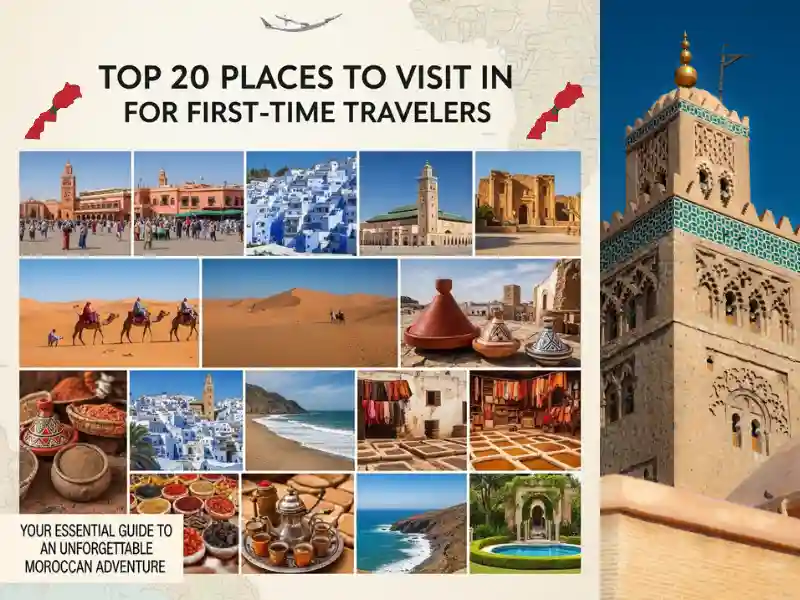
Top 20 Places to Visit in Morocco for First-Time Travelers: Why Morocco Should Be on Every Traveler’s Bucket List
Morocco is one of those destinations that feels like stepping into a living storybook. The moment you arrive, the country greets you with a sensory explosion—vibrant markets filled with colorful spices, the rhythmic call to prayer echoing across ancient medinas, and the aroma of freshly cooked tagine drifting through narrow alleyways. For first-time travelers, Morocco offers an unforgettable blend of history, culture, architecture, desert landscapes, and coastal beauty all wrapped into one fascinating destination. It’s a place where every city feels completely different from the next, making it perfect for travelers who crave variety in their adventures.
One of the biggest reasons Morocco is so captivating is its unique mix of influences. The country sits at a cultural crossroads where Arab, Berber, African, and European traditions blend together. You might start your day wandering through a thousand-year-old marketplace in Fes, sip mint tea in a French-influenced café in Casablanca by afternoon, and watch the sunset over the Sahara dunes in the evening. Few places in the world offer such dramatic shifts in scenery and culture within relatively short distances.
Statistics from global tourism reports show that Morocco welcomes more than 14 million international visitors annually, making it one of the most popular destinations in Africa. Yet despite its popularity, much of the country still feels authentic and deeply rooted in tradition. Local artisans still craft leather, ceramics, and carpets using centuries-old techniques, and traditional riads (courtyard houses turned boutique hotels) allow visitors to stay inside historic architecture rather than generic hotel chains.
For first-time visitors, Morocco also offers incredible diversity in landscapes. You’ll find snow-capped mountains, golden deserts, lush valleys, medieval cities, and Atlantic beaches all within the same country. Imagine riding a camel through the Sahara one day and surfing along the coast the next. That kind of contrast is rare anywhere else in the world.
Morocco is also surprisingly accessible. Major cities like Marrakech, Casablanca, and Tangier are well connected with international flights, and the country’s train network makes traveling between destinations relatively easy. English is widely understood in tourist areas, while French and Arabic remain the primary languages.
If you’re planning your first Moroccan adventure, choosing where to go can feel overwhelming. From ancient medinas to cinematic desert fortresses, the country is packed with unforgettable locations. The places in this guide highlight the most spectacular destinations that capture Morocco’s magic, ensuring your first trip feels nothing short of extraordinary.
Marrakech – The Beating Heart of Moroccan Culture
If Morocco had a heartbeat, it would probably echo through the streets of Marrakech. Known as the “Red City” because of its terracotta-colored walls and buildings, Marrakech is one of the most exciting and energetic destinations in North Africa. For first-time travelers, it often becomes the gateway into Moroccan culture—a place where ancient traditions, chaotic markets, and luxurious riads collide in the most mesmerizing way possible.
Walking through Marrakech feels a bit like entering a maze designed centuries ago. The medina, a UNESCO World Heritage Site, is filled with narrow alleyways that twist and turn endlessly. Every corner reveals something new: a hidden courtyard café, a shop selling handcrafted lanterns, or a stall overflowing with aromatic spices like saffron and cumin. It’s easy to get lost here, but that’s actually part of the experience. The city rewards curiosity, and the more you wander, the more fascinating discoveries you’ll make.
One of Marrakech’s greatest charms is its incredible blend of old and new. While the medina reflects the city’s medieval past, modern neighborhoods such as Gueliz offer trendy restaurants, art galleries, and stylish boutiques. This balance allows travelers to enjoy traditional Moroccan culture while still having access to contemporary comforts.
Food is another reason Marrakech leaves such a strong impression on visitors. From street stalls to elegant rooftop restaurants, the city offers a culinary adventure at every turn. Travelers often rave about dishes like lamb tagine with prunes, couscous with vegetables, and sweet mint tea served in ornate glasses. Dining in Marrakech is rarely just about eating—it’s about atmosphere, conversation, and the slow enjoyment of flavors.
Marrakech also serves as a convenient base for exploring other parts of Morocco. The Atlas Mountains, Sahara Desert, and coastal towns are all within reach, making it a strategic starting point for broader adventures. Many travelers spend a few days in the city before heading out on desert tours or mountain excursions.
What truly makes Marrakech unforgettable, though, is its energy. The city never seems to slow down. Musicians, snake charmers, storytellers, and artisans bring the streets to life in ways that feel almost theatrical. Visiting Marrakech is less like sightseeing and more like stepping onto a constantly moving stage where culture, history, and daily life all perform together.
For first-time travelers, Marrakech isn’t just a destination—it’s an introduction to the vibrant soul of Morocco.
Jemaa el-Fnaa – The World’s Most Vibrant Square
At the center of Marrakech lies Jemaa el-Fnaa, a massive public square that might just be one of the most fascinating gathering places on the planet. During the day it’s lively, but once evening arrives, the square transforms into something truly magical. Imagine dozens of food stalls lighting up the night, musicians playing traditional drums, storytellers surrounded by eager listeners, and the smell of grilled kebabs filling the air. It’s chaotic, colorful, and completely unforgettable.
UNESCO recognized Jemaa el-Fnaa as a Masterpiece of the Oral and Intangible Heritage of Humanity, which tells you just how culturally important this square is. Unlike typical tourist attractions, this place isn’t frozen in time like a museum. It’s alive. The traditions here—storytelling, street performances, herbal medicine stalls—have been passed down through generations.
During the daytime hours, visitors often encounter snake charmers, henna artists, fruit juice vendors, and performers entertaining small crowds. Freshly squeezed orange juice, sold from brightly decorated carts, has become something of a symbol of the square. For many travelers, grabbing a cup and watching the world go by becomes one of the simplest yet most memorable experiences in Marrakech.
As the sun sets, Jemaa el-Fnaa undergoes its most dramatic transformation. Food vendors roll in carts and assemble entire open-air kitchens within minutes. Suddenly, the square becomes a massive street-food market. You’ll see locals and tourists sharing long tables while enjoying grilled meats, harira soup, snail broth, fried eggplant, and sweet pastries. The atmosphere feels almost like a festival that happens every single night.
Travel writer Paul Bowles once described Marrakech as “a dream city”, and nowhere does that description feel more accurate than in Jemaa el-Fnaa. The square doesn’t just represent Marrakech—it represents Morocco’s tradition of storytelling, community, and public life.
Standing in the middle of the square at night can feel overwhelming in the best possible way. Drums echo across the crowd, smoke rises from food stalls, and voices blend into a constant buzz of activity. It’s not polished or perfectly organized, but that’s exactly what makes it so captivating.
For first-time travelers, visiting Jemaa el-Fnaa is more than just checking off a landmark. It’s experiencing the cultural heartbeat of Marrakech, a place where centuries of tradition continue to thrive in the middle of modern life.
Majorelle Garden – A Peaceful Oasis in the Red City
Right in the middle of the energetic chaos of Marrakech lies a place that feels almost like stepping into a dream—Majorelle Garden. While the streets outside buzz with scooters, market sellers, and endless activity, this botanical garden offers a calm, almost meditative escape. Created in the 1920s by French painter Jacques Majorelle, the garden later gained worldwide fame when legendary fashion designer Yves Saint Laurent and his partner Pierre Bergé restored and preserved it in the 1980s.
The first thing visitors notice is the intense shade of blue that dominates the architecture. Known today as “Majorelle Blue,” this vibrant cobalt color appears on walls, fountains, and decorative elements throughout the garden. Against the backdrop of lush greenery and desert plants, the color feels almost surreal. It’s no surprise that Majorelle Garden has become one of the most photographed places in Morocco.
But the beauty of the garden isn’t just about color—it’s about biodiversity. Spread across nearly two and a half acres, the garden houses more than 300 plant species collected from five continents. Visitors wander past towering bamboo groves, giant cacti, water lilies, palm trees, and exotic succulents. The pathways are carefully designed so that every turn reveals a new composition of plants, colors, and reflections in small pools.
The garden also includes the Berber Museum, which showcases the rich culture of Morocco’s indigenous Berber people. Exhibits feature traditional clothing, jewelry, tools, and artifacts that tell the story of communities who have lived in North Africa for thousands of years. It’s a subtle but meaningful reminder that Morocco’s cultural identity stretches far beyond its famous cities and tourist sites.
For many travelers, Majorelle Garden offers a welcome break from the sensory overload of Marrakech’s medina. The sound of fountains replaces the noise of traffic, and the shaded walkways invite visitors to slow down and simply enjoy the surroundings. Even the air feels different here—cooler and quieter under the canopy of plants.
If you’re visiting Marrakech for the first time, Majorelle Garden provides a perfect contrast to the busy markets and historic palaces. It’s a place where art, nature, and history come together in a surprisingly intimate way. Spending an hour or two here allows travelers to recharge before diving back into the lively rhythm of the Red City.
Fes – Morocco’s Spiritual and Cultural Capital
If Marrakech is Morocco’s energetic showpiece, Fes is its intellectual and spiritual soul. Founded in the 9th century, the city is one of the oldest continuously inhabited urban areas in the world, and it remains deeply connected to its traditions. Walking through Fes feels like stepping into a living medieval city where craftsmanship, scholarship, and religion have shaped daily life for more than a thousand years.
The city is most famous for Fes el Bali, the ancient walled medina that forms the historic heart of the city. This labyrinth of narrow alleys is so complex that even experienced travelers rely on local guides to navigate it. Within its walls, you’ll find over 9,000 winding streets, making it one of the largest car-free urban areas on Earth. Instead of cars, donkeys and handcarts move goods through the narrow passages, creating an atmosphere that feels remarkably unchanged from centuries ago.
Fes has long been considered Morocco’s center of learning and craftsmanship. Artisans here specialize in traditional techniques that have been preserved for generations—leather tanning, ceramic tile making, metal engraving, and carpet weaving. Watching these artisans work feels like observing living history. The famous Chouara Tannery, where leather is dyed in colorful stone vats using natural ingredients, remains one of the city’s most iconic sights.
Beyond its crafts, Fes is also a deeply spiritual city. The call to prayer echoes through its mosques five times a day, and religious schools known as madrasas display some of the finest examples of Moroccan architecture. Intricate tilework, carved cedar wood, and detailed stucco patterns decorate these historic buildings, creating spaces that feel both sacred and artistic.
Travelers often describe Fes as more authentic and less commercialized than Marrakech. While tourism certainly exists, the city’s primary rhythm still revolves around local life. Bakers carry trays of bread to communal ovens, families shop in neighborhood markets, and craftsmen continue their work in small workshops tucked into hidden corners.
For first-time visitors to Morocco, Fes provides something incredibly valuable: a glimpse into the deep cultural roots of the country. It’s not just a destination for sightseeing; it’s a place where centuries of knowledge, tradition, and artistry continue to shape everyday life.
Fes el Bali – The World’s Largest Living Medina
At the heart of Fes lies Fes el Bali, widely considered the largest and most intact medieval city in the world. This ancient medina is not just a historic district preserved for tourists—it’s a vibrant, living community where more than 150,000 residents continue their daily routines inside walls built nearly 1,200 years ago.
Entering the medina through the famous Bab Bou Jeloud (Blue Gate) feels like crossing into another era. Immediately, the modern world fades away and is replaced by a maze of alleyways so narrow that sunlight sometimes barely reaches the ground. These streets twist and branch endlessly, lined with shops selling spices, carpets, lanterns, pottery, and countless other handcrafted goods.
What makes Fes el Bali particularly fascinating is its layered complexity. The medina contains mosques, madrasas, markets, bakeries, hammams, and homes all woven together in a dense urban tapestry. Unlike many historic cities that have been modernized, this one still functions largely as it did centuries ago. Donkeys carry supplies through the streets, artisans work in tiny workshops, and merchants negotiate prices with customers just as their ancestors did.
One of the medina’s most famous attractions is the Chouara Tannery, where leather has been processed using traditional methods since the Middle Ages. From nearby terraces, visitors can see workers standing in colorful dye pits filled with natural pigments like saffron, indigo, and henna. The process is physically demanding, but the resulting leather products—bags, slippers, and jackets—are some of Morocco’s most sought-after exports.
Beyond its markets, Fes el Bali also showcases incredible Islamic architecture. Historic madrasas such as Al-Attarine Madrasa feature stunning geometric tilework known as zellige, along with intricately carved wood and stucco. These decorative patterns aren’t just beautiful; they reflect centuries of artistic innovation rooted in Islamic design traditions.
Getting lost in Fes el Bali is almost guaranteed, but that unpredictability is part of the adventure. Around one corner you might discover a quiet courtyard filled with fountains, while another path leads to a lively market filled with the sound of bargaining merchants.
For travelers who want to experience Morocco at its most traditional and immersive, Fes el Bali offers a journey through living history unlike anywhere else on Earth.
Al Quaraouiyine University – The Oldest University in the World
Hidden within the winding streets of Fes lies one of the most remarkable institutions in human history—Al Quaraouiyine University. Founded in 859 AD by Fatima al-Fihri, it holds the Guinness World Record as the oldest continuously operating university in the world. Long before Europe established famous universities like Oxford or Bologna, scholars were already gathering here to study theology, science, mathematics, and philosophy.
The story behind the university’s founding is just as fascinating as the institution itself. Fatima al-Fihri, a wealthy and educated woman, used her inheritance to build a mosque and educational center that would serve the community. Over time, the institution grew into a major intellectual hub that attracted scholars from across North Africa, the Middle East, and even parts of Europe.
Throughout the Middle Ages, Al Quaraouiyine became a center for Islamic scholarship and scientific study. Subjects taught here included astronomy, grammar, medicine, and law. Some historians believe that knowledge from this university eventually influenced European intellectual movements during the Renaissance.
The architecture of the complex reflects the artistic traditions of Morocco. Courtyards decorated with intricate zellige tiles, carved cedar wood, and marble fountains create an atmosphere that feels both scholarly and spiritual. The library, which has undergone modern restoration, contains ancient manuscripts that date back centuries.
While non-Muslim visitors cannot enter the main prayer hall, they can still admire parts of the complex from nearby viewpoints within the medina. Even from outside, the significance of the place is undeniable. Standing near the university, it’s easy to imagine generations of students walking these same streets in pursuit of knowledge.
For travelers interested in history and culture, Al Quaraouiyine represents something profound. It reminds us that Morocco has long been part of the global intellectual story, contributing ideas and scholarship that helped shape civilizations.
Visiting Fes without acknowledging this historic institution would be like visiting Athens without seeing the Parthenon. It stands as a powerful symbol of Morocco’s deep educational and cultural heritage.
Chefchaouen – The Famous Blue Pearl of Morocco
Tucked away in the scenic Rif Mountains, the enchanting town of Chefchaouen feels almost like a place pulled straight from a fantasy novel. Known globally as the “Blue Pearl of Morocco,” this small mountain town has gained international fame for its stunning blue-painted streets and buildings. For first-time travelers, visiting Chefchaouen often becomes one of the most memorable experiences in the entire country. The moment you step into the medina, you’re surrounded by shades of blue—from soft sky tones to deep cobalt walls that glow beautifully under the Moroccan sun.
The origin of the blue color has several fascinating explanations. Some historians believe Jewish refugees who settled here in the 15th century painted the town blue as a symbol of heaven and spirituality. Others claim the color helps keep buildings cool and repels mosquitoes. Whatever the real reason, the effect is mesmerizing. Walking through Chefchaouen feels like strolling through a living watercolor painting.
The town itself was founded in 1471, originally serving as a fortress against Portuguese invasions. Over centuries, it developed into a peaceful mountain community known for its relaxed atmosphere and welcoming locals. Unlike the bustling chaos of cities like Marrakech or Fes, Chefchaouen moves at a slower pace. Cafés spill into quiet squares, cats lounge on sunlit steps, and shop owners greet visitors with warm smiles rather than aggressive sales pitches.
The surrounding landscape also adds to Chefchaouen’s charm. The Rif Mountains provide dramatic scenery and plenty of opportunities for hiking and outdoor adventures. Many travelers use the town as a base for exploring nearby natural attractions like Akchour Waterfalls and the famous God’s Bridge rock formation. These hidden gems offer breathtaking views and refreshing swimming spots during warmer months.
Photography lovers especially fall in love with Chefchaouen. Every narrow alley seems designed for a perfect photo: flower pots hanging on blue walls, colorful carpets draped over balconies, and sunlight filtering through stone archways. Social media has helped the town gain global recognition, but even with growing tourism, it has managed to maintain its authenticity.
Chefchaouen represents a softer, more tranquil side of Morocco. After experiencing the busy medinas and vibrant markets of larger cities, spending a few days here feels like hitting the pause button. It’s the kind of place where travelers slow down, breathe in the mountain air, and truly absorb the beauty of Moroccan culture.
The Blue Medina Streets
The true magic of Chefchaouen lies within its blue medina, a network of narrow streets that twist through the town like a labyrinth painted in endless shades of blue. Unlike other Moroccan medinas that can feel overwhelming, Chefchaouen’s version is smaller, quieter, and far easier to explore. This makes it an ideal destination for first-time travelers who want the charm of a traditional medina without the intense crowds.
Walking through these streets is an experience that engages all the senses. The walls glow with layers of blue pigment, sometimes fading and sometimes freshly painted. Local residents regularly repaint sections of the town, ensuring that the iconic color palette remains vibrant year-round. Sunlight reflects off the walls, creating soft shadows and unique textures that change throughout the day.
Along these winding alleys, visitors will find small artisan shops selling handmade goods unique to the region. Unlike the larger markets in Marrakech or Fes, the atmosphere here feels relaxed and personal. Many shop owners specialize in woven blankets, traditional wool garments, handmade soaps, and locally crafted leather products. Because Chefchaouen sits in a mountainous region, its crafts often reflect rural Berber traditions rather than urban Moroccan styles.
One of the most photographed spots in the medina is a staircase lined with flower pots and painted a bright azure blue. Travelers from around the world gather here to capture the perfect image, yet despite its popularity, the location still feels authentic rather than staged. That authenticity is part of Chefchaouen’s charm—life here continues naturally around visiting photographers.
The medina also leads to Plaza Uta el-Hammam, the town’s central square. This lively gathering place features cafés, restaurants, and the historic Kasbah fortress, which dates back to the 15th century. Sitting in a café here with a cup of Moroccan mint tea while watching daily life unfold is one of the simplest yet most rewarding experiences in the town.
Exploring the blue streets of Chefchaouen is less about checking off specific landmarks and more about enjoying the journey itself. Every corner reveals a new shade of blue, a hidden courtyard, or a friendly greeting from a local resident. It’s the kind of place where getting lost isn’t frustrating—it’s part of the adventure.
Sahara Desert – Morocco’s Most Iconic Landscape
No first trip to Morocco feels complete without experiencing the vast and mesmerizing Sahara Desert. Stretching across North Africa and covering more than 9 million square kilometers, the Sahara is the largest hot desert in the world. In Morocco, travelers typically access the desert through regions like Merzouga or Zagora, where towering sand dunes create one of the most unforgettable landscapes on Earth.
The first glimpse of the desert often feels surreal. After hours of driving through rocky plains and small desert towns, golden dunes suddenly appear on the horizon like waves frozen in time. These dunes, known as ergs, can reach heights of up to 150 meters, creating an ever-changing sea of sand sculpted by the wind.
One of the most popular experiences in the Sahara is a camel trek at sunset. Riding slowly across the dunes while the sun dips below the horizon creates a moment that many travelers describe as magical. The sky shifts through shades of orange, pink, and purple while the desert becomes quiet except for the soft footsteps of camels moving across the sand.
Nighttime in the Sahara offers another unforgettable spectacle. With almost no light pollution, the desert sky reveals an astonishing number of stars. Travelers staying in traditional Berber desert camps often gather around campfires while local musicians play drums and sing traditional songs. It’s a rare opportunity to experience both the natural beauty and cultural heritage of Morocco’s desert communities.
The Sahara also teaches visitors about the resilience of people who have lived in this harsh environment for centuries. Nomadic Berber tribes developed deep knowledge of desert survival, navigation, and trade routes that once connected North Africa with sub-Saharan regions.
Standing on top of a dune at sunrise, watching the first light spread across endless waves of sand, many travelers realize something profound: the Sahara isn’t just a destination—it’s an experience that shifts your sense of scale and perspective.
Merzouga Dunes – Gateway to the Golden Desert
The small village of Merzouga serves as the main gateway to Morocco’s most spectacular sand dunes, known as Erg Chebbi. Rising dramatically from the surrounding desert landscape, these dunes are among the tallest in Morocco and form one of the country’s most iconic natural attractions.
Erg Chebbi stretches roughly 28 kilometers long and 5 kilometers wide, creating a massive sea of golden sand that looks almost otherworldly. Depending on the time of day, the dunes shift color from pale gold to deep orange and even reddish hues at sunset. This constantly changing palette makes the landscape feel alive, as if the desert itself is quietly transforming under the sun.
Most travelers begin their desert adventure in Merzouga before heading out on camel caravans or 4×4 excursions. Camel trekking remains the most traditional way to enter the dunes, echoing the journeys made by ancient traders who once crossed the Sahara along caravan routes. Sitting atop a camel while moving slowly through the sand may feel unusual at first, but the rhythmic pace quickly becomes relaxing.
Desert camps located deep within the dunes provide a unique overnight experience. These camps range from simple Berber tents to luxurious “glamping” setups with comfortable beds and private bathrooms. After sunset, guests often gather around campfires for traditional Moroccan meals and music performed on hand drums and string instruments.
Sunrise in Erg Chebbi is perhaps the most magical moment of all. As the first light appears, the dunes glow softly and long shadows stretch across the sand. Climbing to the top of a dune to watch this transformation feels almost meditative.
Merzouga offers something rare in modern travel: true silence. Without traffic, city lights, or constant noise, the desert allows visitors to experience a kind of peace that’s becoming increasingly difficult to find elsewhere in the world.
Casablanca – Morocco’s Modern Metropolis
While many Moroccan cities are defined by ancient medinas and historic traditions, Casablanca represents the country’s modern face. As Morocco’s largest city and economic powerhouse, Casablanca feels more like a global business hub than a traditional tourist destination. Skyscrapers, wide boulevards, and contemporary architecture dominate the skyline, reflecting the city’s rapid development over the past century.
The city gained international fame through the classic 1942 film “Casablanca,” although most scenes were actually filmed in Hollywood. Despite this cinematic myth, the real Casablanca has its own unique charm. The city blends French colonial architecture, modern infrastructure, and Moroccan culture, creating an urban environment unlike anywhere else in the country.
Casablanca also serves as Morocco’s main transportation hub. The Mohammed V International Airport is the busiest in the country, and high-speed trains connect the city to destinations like Rabat and Tangier. For many travelers, Casablanca becomes the starting or ending point of their Moroccan journey.
Beyond business and transportation, the city offers vibrant nightlife, upscale restaurants, and beachside promenades. The Corniche district, located along the Atlantic coast, features stylish cafés, beach clubs, and ocean views that attract both locals and visitors.
Although Casablanca may lack the medieval charm of Fes or the colorful markets of Marrakech, it provides something equally interesting: a glimpse into Morocco’s evolving identity as a modern nation balancing tradition and progress.
Hassan II Mosque – An Architectural Masterpiece
Dominating Casablanca’s coastline stands one of the most extraordinary religious buildings in the world: the Hassan II Mosque. Completed in 1993, it is the largest mosque in Africa and one of the largest on Earth, capable of accommodating more than 100,000 worshippers between its interior and courtyard.
What makes the mosque truly breathtaking is its location. Part of the structure extends directly over the Atlantic Ocean, built on a platform that allows waves to crash dramatically against the rocks below. This design symbolizes the Quranic verse that describes God’s throne as being built upon water.
The mosque’s minaret rises 210 meters, making it the tallest religious tower in the world. At night, a powerful laser beam projects from the top toward Mecca, visible for miles across the city.
Inside, the craftsmanship is astonishing. Moroccan artisans spent years creating intricate zellige tile mosaics, carved cedar ceilings, marble floors, and sculpted plaster patterns. Every detail reflects the country’s rich artistic heritage.
Unlike many mosques in the Islamic world, Hassan II Mosque allows non-Muslim visitors on guided tours, making it one of the few opportunities for travelers to explore the interior of a grand Moroccan mosque.
Standing in its massive courtyard while the Atlantic wind blows in from the ocean, visitors quickly realize they are witnessing one of Morocco greatest architectural achievements.
Conclusion
Morocco is a country that captivates travelers with its incredible diversity. From the bustling medinas of Marrakech and Fes to the peaceful blue streets of Chefchaouen, every destination offers a completely different atmosphere and story. Add the vast dunes of the Sahara Desert, the coastal beauty of Essaouira, the cultural crossroads of Tangier, and the modern energy of Casablanca, and it becomes clear why Morocco continues to fascinate visitors from around the world.
For first-time travelers, the key to enjoying Morocco is embracing its contrasts. Ancient traditions coexist with modern life, quiet mountain towns sit just hours away from lively cities, and desert silence contrasts with the lively rhythm of markets and festivals. Each place reveals another layer of Moroccan culture, history, and natural beauty.
The destinations highlighted in this guide represent some of the most unforgettable experiences Morocco has to offer. Whether you’re wandering through centuries-old alleyways, sipping mint tea in a quiet courtyard, or watching the sunset over golden dunes, Morocco has a way of leaving a lasting impression on every traveler who visits.
FAQs
1. What is the best time to visit Morocco?
The best time to visit Morocco is during spring (March–May) and autumn (September–November) when temperatures are comfortable for exploring cities, mountains, and deserts.
2. Is Morocco safe for first-time travelers?
Yes, Morocco is generally considered safe for tourists. Like any destination, travelers should stay aware of their surroundings and follow common travel precautions.
3. How many days are ideal for a Morocco trip?
A well-rounded Morocco trip usually takes 10–14 days, allowing travelers to explore major cities, visit the Sahara Desert, and experience coastal or mountain destinations.
4. What currency is used in Morocco?
Morocco uses the Moroccan Dirham (MAD). Cash is widely used in markets and small shops, though larger hotels and restaurants accept credit cards.
5. Do people speak English in Morocco?
English is increasingly common in tourist areas, though Arabic and French remain the primary languages spoken throughout the country.