Understanding Morocco Climate Throughout the Year
Travelers often ask a simple question before planning their trip: When is the best time to visit Morocco? The answer, however, isn’t as straightforward as picking a single month on the calendar. Morocco is a geographically diverse country where the climate can change dramatically within just a few hours of travel. One moment you might be wandering through the breezy coastal streets of Essaouira, and the next you could be sweating in the heat of Marrakech or watching snow fall in the Atlas Mountains.
That’s what makes Morocco fascinating. The country blends Mediterranean, Atlantic, desert, and mountain climates into one destination. Because of this diversity, the best time to visit often depends on what you want to experience. Are you dreaming of camel trekking across the Sahara at sunset? Or maybe you’re more interested in exploring the ancient medinas of Fez and Marrakech without melting in the heat. Some travelers prioritize surfing along the Atlantic coast, while others want to hike through mountain villages.
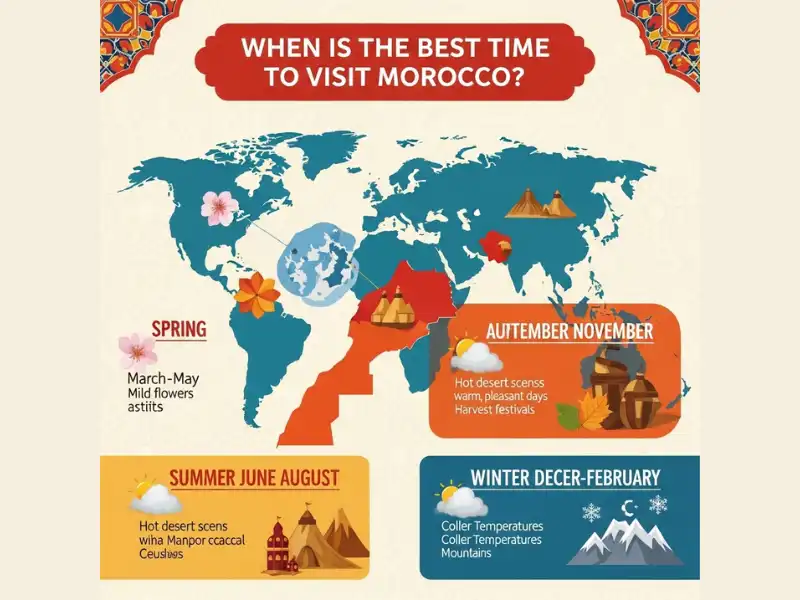
Another factor worth considering is tourism seasonality. Morocco peak travel periods tend to occur in spring (March to May) and autumn (September to November) when temperatures are comfortable across most regions. During these months, you’ll find lively souks, bustling cafes, and clear skies perfect for sightseeing. Summers can become extremely hot in inland cities, while winters may surprise visitors with snow in higher elevations.
The key is understanding how Morocco’s seasons influence travel experiences. Weather affects everything—from desert tours and hiking trails to cultural festivals and crowd levels. Choosing the right time can transform a good trip into an unforgettable one.
The rest of this guide breaks down Morocco’s weather month by month and season by season. By the end, you’ll know exactly when to go for the best weather, fewer crowds, and the experiences you’re hoping for.
Morocco Diverse Climate Zones
One reason Morocco feels like several destinations wrapped into one is its remarkably varied climate zones. While the country isn’t massive geographically, its landscapes range from ocean coastlines to towering mountains and vast desert plains. Each region behaves almost like a separate climate system, which means the weather in one city may be completely different just a few hundred kilometers away.
The Atlantic Coast, including cities such as Casablanca, Rabat, Essaouira, and Agadir, enjoys a mild maritime climate throughout the year. Ocean breezes help moderate temperatures, keeping summers cooler and winters relatively comfortable. Even in July and August, when inland Morocco can feel scorching, coastal cities remain pleasantly warm. That’s why many locals escape to the coast during the hottest months.
Move inland to cities like Marrakech and Fes, and the climate shifts dramatically. These historic imperial cities experience continental-style weather, which means hotter summers and cooler winters. Summer temperatures often exceed 40°C (104°F) in Marrakech, especially in July and August. Walking through the maze-like souks during midday can feel like stepping into an oven.
Then there’s the Atlas Mountains, stretching across central Morocco like a natural spine. Elevation plays a huge role here. In winter, snow blankets mountain towns such as Ifrane and Oukaimeden, transforming them into unexpected ski destinations in North Africa. Temperatures can drop below freezing, which surprises many first-time visitors.
Finally, the Sahara Desert region, including Merzouga and Erg Chebbi, presents another extreme climate. Days can be blisteringly hot in summer but surprisingly cold at night, especially during winter months. Desert temperatures often swing dramatically between day and night.
Because Morocco packs so many climates into one country, travelers can tailor their experience depending on the season. Understanding these climate zones is the first step toward planning a trip that matches your comfort level and travel goals.
How Geography Shapes Morocco Weather
Morocco’s weather patterns are heavily influenced by its unique geographical position. Sitting at the crossroads of Africa, Europe, and the Atlantic Ocean, the country experiences climate influences from several different directions. This geographical diversity explains why travelers can experience cool ocean breezes in the morning and desert heat by afternoon if they move between regions.
One of the biggest factors shaping Morocco’s climate is the Atlas Mountain range. These mountains act like a natural barrier that separates the lush coastal regions from the arid Sahara Desert. Moist air coming from the Atlantic Ocean tends to release rainfall on the western side of the mountains, which is why areas near the coast and northern regions tend to be greener and more fertile.
On the other side of the Atlas Mountains, conditions become significantly drier. Cities and towns closer to the Sahara—such as Ouarzazate and Zagora—experience desert-like conditions with minimal rainfall and intense sunlight throughout the year.
Latitude also plays a role. Northern cities like Tangier and Chefchaouen have a climate influenced by the Mediterranean Sea, making them slightly cooler and wetter than southern regions. These areas often enjoy pleasant summers and mild winters, which makes them attractive for travelers seeking comfortable sightseeing weather.
Wind patterns add another layer of complexity. The Atlantic coast frequently experiences steady breezes, particularly in Essaouira, which has earned a reputation as one of the world’s top kitesurfing and windsurfing destinations. While the wind may frustrate beachgoers hoping for calm conditions, surfers and water sports enthusiasts absolutely love it.
The result of all these geographical influences is a country where timing your visit can dramatically shape your travel experience. A trip focused on coastal relaxation might be perfect in summer, while desert adventures and cultural exploration tend to shine during cooler months.
Understanding these geographic and climatic influences sets the stage for exploring Morocco season by season—starting with what many consider the best time to visit: spring.
Visiting Morocco in Spring (March–May)
If someone asked seasoned travelers to choose the single best season to visit Morocco, many would point to spring without hesitation. From March through May, the country bursts into life with mild temperatures, blooming landscapes, and ideal sightseeing conditions. It’s the sweet spot between the cooler winter months and the intense heat that arrives in summer.
Spring transforms Morocco’s scenery in subtle but beautiful ways. Valleys in the Atlas Mountains turn green, almond and cherry blossoms begin to appear, and rural landscapes look far more vibrant than they do later in the year. Even desert regions feel more comfortable, as daytime temperatures are warm but not overwhelming.
Cities like Marrakech, Fez, and Meknes become much easier to explore during spring. Instead of hiding in shaded cafes during scorching afternoons, visitors can comfortably wander through historic medinas, visit palaces, and explore colorful souks for hours. Temperatures typically range between 18°C and 28°C (64°F to 82°F) depending on the region.
Spring is also a time when Morocco hosts several cultural festivals and events. Music festivals, local celebrations, and artisan markets begin popping up across different regions. These gatherings offer travelers a chance to experience Moroccan culture beyond the typical tourist attractions.
There is one small catch: because spring weather is so pleasant, it’s also one of Morocco’s busiest tourism seasons. Popular destinations such as Chefchaouen, Marrakech, and the Sahara Desert camps can fill up quickly, especially around Easter and European holiday periods. Booking accommodations and tours in advance becomes important if you plan to travel during this peak time.
Still, the combination of comfortable weather, lively culture, and stunning landscapes makes spring incredibly appealing. For travelers hoping to experience Morocco at its most balanced and welcoming, this season often delivers the perfect introduction.
March in Morocco: Early Spring Conditions
March marks the gentle transition from winter into spring across Morocco. While it may not yet have the vibrant bloom of April and May, the country begins to shake off the chill of winter and settle into milder, more pleasant temperatures. For travelers who prefer fewer crowds and lower prices, March can actually be one of Morocco’s most underrated travel months.
In major cities like Marrakech and Fez, daytime temperatures typically hover between 17°C and 23°C (63°F to 73°F). This creates comfortable conditions for exploring historic neighborhoods, museums, and bustling markets without dealing with intense heat. Walking through the maze-like alleys of the Fez Medina, one of the world’s largest car-free urban areas, becomes far more enjoyable when the weather is cool and refreshing.
Coastal cities such as Casablanca and Rabat remain slightly cooler due to Atlantic Ocean breezes. While beach swimming may still feel a bit chilly for some visitors, seaside promenades, cafes, and scenic viewpoints are particularly pleasant during this time of year.
The Atlas Mountains may still hold patches of snow in March, especially at higher elevations. This creates unique travel opportunities. Adventurous visitors can combine cultural sightseeing with mountain trekking or even late-season skiing in resorts like Oukaimeden, located about 80 kilometers from Marrakech.
Rain is still possible during March, particularly in northern regions, but it usually arrives in short bursts rather than prolonged storms. Packing a light waterproof jacket is typically enough preparation.
One of the biggest advantages of visiting Morocco in March is the atmosphere. Tourist crowds remain manageable, prices for riads and guided tours can be slightly lower, and locals are preparing for the busy season ahead. Travelers often get a more relaxed experience while still enjoying favorable weather conditions.
In many ways, March feels like Morocco warming up for its most vibrant months—offering a quieter but equally charming travel experience.
April and May: Morocco Peak Travel Season
April and May represent the moment when Morocco truly shines for travelers. By this time, the lingering coolness of winter has completely disappeared, yet the intense summer heat hasn’t arrived. The result is a near-perfect climate across most of the country, making these months widely regarded as the absolute best time to visit Morocco.
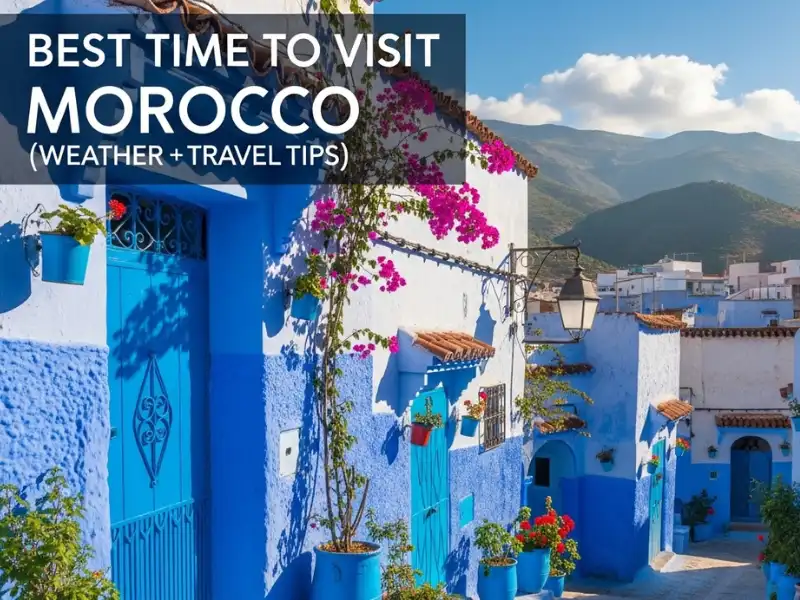
During April and May, temperatures in major cities such as Marrakech, Fez, and Rabat usually range between 20°C and 30°C (68°F to 86°F). This sweet spot allows visitors to explore historic medinas, colorful souks, gardens, and ancient palaces without feeling drained by heat. Walking through the Jardin Majorelle in Marrakech or climbing viewpoints in the blue city of Chefchaouen becomes a joy rather than a sweaty endurance test.
Nature also reaches one of its most beautiful stages during these months. Valleys in the High Atlas Mountains become lush and green, wildflowers appear across hillsides, and rural villages feel vibrant and alive. Many travelers are surprised by how colorful Morocco can be in spring, especially if they previously imagined the country as purely desert landscapes.
April and May are also ideal for Sahara Desert adventures. Camel trekking across the golden dunes of Erg Chebbi or Erg Chigaga becomes comfortable because daytime temperatures are warm but manageable, and evenings in desert camps feel pleasantly cool rather than freezing. Watching the sunset over endless sand dunes during this season feels almost surreal.
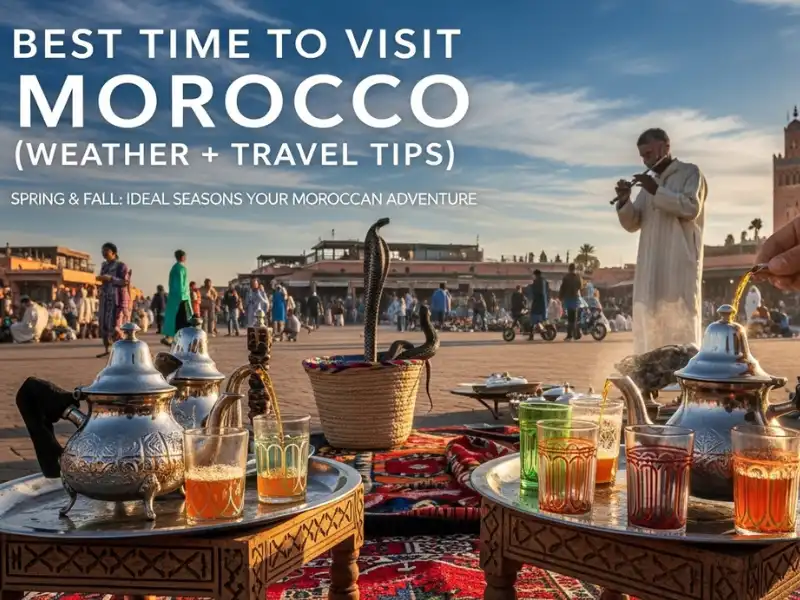
Another reason these months are popular is the lively atmosphere across Morocco’s cities. Cafes overflow with locals and visitors enjoying mint tea, rooftop terraces come alive at sunset, and street performers bring energy to public squares like Jemaa el-Fnaa in Marrakech.
Of course, peak conditions come with one challenge: larger crowds and higher prices. Hotels, riads, and desert tours can fill up weeks in advance. Planning ahead becomes essential, especially if your itinerary includes popular destinations such as Marrakech, Chefchaouen, or Sahara desert camps.
Even with the crowds, April and May consistently deliver one of the most balanced travel experiences Morocco has to offer.
Visiting Morocco in Summer (June–August)
Summer in Morocco can be a tale of two completely different experiences. On one hand, coastal cities become lively beach destinations with refreshing ocean breezes. On the other hand, inland cities and desert regions can experience intense heat that challenges even seasoned travelers.
Between June and August, temperatures in cities like Marrakech, Fez, and Ouarzazate often climb above 40°C (104°F) during the day. Walking through narrow alleyways under direct sun can quickly become exhausting, especially for travelers unaccustomed to such heat. Locals adapt by slowing down their routines—shops may close during peak afternoon hours, and activity shifts to evenings when temperatures cool slightly.
Despite the heat, summer still attracts many travelers, especially those visiting during European holiday periods. Families, backpackers, and festival-goers continue to explore Morocco’s cultural attractions, though many plan their sightseeing early in the morning or later in the evening.
One major advantage of visiting Morocco in summer is the vibrant nightlife and cultural events. Cities like Marrakech and Rabat host music festivals, art gatherings, and outdoor performances. The famous Gnaoua World Music Festival in Essaouira, for example, draws international musicians and thousands of visitors each year.
Another benefit is that some popular attractions become less crowded during the hottest parts of the day. Travelers who plan strategically—taking midday breaks in shaded riads or cafes—can still enjoy iconic landmarks without the large tour groups that dominate during spring.
Summer is also when Morocco’s Atlantic coast becomes particularly appealing. Ocean temperatures warm up, beach towns buzz with activity, and cool winds make the climate far more comfortable than inland areas.
So while summer may not be ideal for every type of traveler, it can still offer an exciting experience—especially for those who focus on coastal destinations or don’t mind adjusting their schedule to beat the heat.
Coastal Cities in Summer: Casablanca, Essaouira, and Tangier
If you plan to visit Morocco during summer, the Atlantic and Mediterranean coastlines become your best friends. Coastal cities provide a refreshing escape from the extreme temperatures found inland, thanks to constant ocean breezes and slightly cooler conditions.
Take Essaouira, for example. This charming seaside town is famous for its relaxed atmosphere, historic medina, and strong Atlantic winds. While inland cities like Marrakech may be baking in 40°C heat, Essaouira often stays around 23–27°C (73–81°F). The wind keeps the air fresh and makes the city a hotspot for kitesurfing and windsurfing enthusiasts.
The laid-back vibe of Essaouira attracts artists, musicians, and travelers looking for a slower pace. Visitors can wander through whitewashed streets with blue shutters, explore art galleries, enjoy freshly grilled seafood by the harbor, or simply watch the sunset over the Atlantic.
Further north, Casablanca offers a different kind of coastal experience. As Morocco’s largest city and economic hub, it blends modern architecture with historic landmarks. The magnificent Hassan II Mosque, perched dramatically above the ocean, becomes especially stunning at sunset during summer evenings.
Meanwhile, Tangier, located near the Strait of Gibraltar, offers a mix of Mediterranean and Atlantic influences. This city has long attracted writers and artists due to its cosmopolitan history and scenic views. Summer in Tangier feels lively but manageable thanks to cooling sea winds.
Beach lovers will also find plenty to enjoy along Morocco’s coast. Resorts in Agadir and nearby beach towns provide wide sandy shores, surfing opportunities, and vibrant nightlife.
For travelers visiting Morocco in the hottest months, focusing on coastal destinations allows them to experience the country’s culture and scenery without battling extreme heat every day.
Inland Cities and the Sahara Desert in Summer
While Morocco’s coast offers relief in summer, inland cities and desert regions can become extremely hot. Understanding these conditions helps travelers decide whether they’re comfortable exploring these areas during the peak summer months.
Cities such as Marrakech, Fez, and Meknes experience some of the highest temperatures in the country. In July and August, daytime highs frequently reach 38°C to 45°C (100°F to 113°F). The combination of sun exposure and heat radiating from stone buildings can make afternoon exploration quite intense.
That doesn’t mean visiting these cities in summer is impossible—it simply requires smart planning. Many experienced travelers follow a local rhythm:
- Early morning sightseeing
- Midday rest in shaded cafes or riads
- Evening exploration after sunset
This schedule allows visitors to enjoy attractions like Bahia Palace, the Saadian Tombs, or the Marrakech souks without the harshest heat.
The Sahara Desert is even more extreme during summer. Daytime temperatures in regions like Merzouga can exceed 45°C (113°F). Camel trekking across dunes under such conditions can be physically challenging and potentially dangerous without proper preparation.
For this reason, many tour operators reduce desert excursions during the hottest months or schedule activities very early in the morning. Some travelers still visit the Sahara in summer, but it’s generally considered far from the ideal season.
However, summer nights in the desert can still feel magical. After sunset, temperatures drop, revealing clear skies filled with thousands of stars. Sitting around a campfire in the quiet desert landscape remains one of Morocco’s most unforgettable experiences.
Travelers who visit inland regions during summer simply need to respect the climate and plan their activities accordingly.
Visiting Morocco in Autumn (September–November)
Autumn is often described as Morocco’s second golden travel season, rivaling spring in terms of ideal weather and overall travel experience. From September through November, the country gradually cools down after the intense summer heat, creating pleasant conditions for exploring cities, mountains, and desert landscapes.
September still feels like summer in many regions, but temperatures begin to drop to more comfortable levels. By October and November, most of Morocco enjoys daytime temperatures between 20°C and 28°C (68°F to 82°F)—perfect for sightseeing.
One of the best aspects of autumn travel is the balance between great weather and fewer crowds. Many European tourists return home after summer holidays, meaning Morocco’s most popular destinations feel slightly less hectic. Visitors often find it easier to book riads, tours, and desert camps without the intense competition seen in spring.
Autumn is particularly appealing for Sahara Desert tours. The scorching summer heat fades, allowing travelers to enjoy camel treks, sandboarding, and overnight desert camps comfortably. Watching the sun set over golden dunes becomes a peaceful, unforgettable moment.
The Atlas Mountains also shine during autumn. Hiking trails offer clear views, crisp air, and beautiful landscapes as seasonal colors begin to shift. Mountain villages feel authentic and welcoming during this time, offering travelers a deeper cultural experience.
Food lovers will appreciate autumn as well. Harvest season brings fresh produce, olives, dates, and spices to Moroccan markets. Walking through a local souk during harvest time reveals an incredible array of colors, aromas, and flavors.
Autumn manages to capture much of what travelers love about spring—pleasant temperatures, lively culture, and scenic beauty—while often delivering a more relaxed and less crowded experience.
September: Warm Days and Fewer Tourists
September marks the transition from Morocco’s intense summer heat into a far more comfortable and traveler-friendly season. The scorching temperatures of July and August gradually fade, yet the warmth of summer still lingers in the air. For many seasoned travelers, September is one of Morocco’s most underrated months, offering pleasant weather combined with noticeably smaller tourist crowds.
Across most of the country, daytime temperatures in September range between 26°C and 32°C (79°F to 90°F). While this is still warm, it feels significantly more manageable compared to peak summer. Cities like Marrakech, Fez, and Meknes become enjoyable to explore again, especially during mornings and evenings. The bustling souks regain their lively rhythm, street food stalls fill the air with aromas of spices and grilled meats, and rooftop terraces start buzzing with travelers watching the sunset over ancient city skylines.
One of the biggest advantages of visiting Morocco in September is the post-summer calm. Many European families return home as schools reopen, which means popular attractions become less crowded. Travelers can wander through iconic sites like Bahia Palace in Marrakech or the Al Quaraouiyine University area in Fez without the overwhelming crowds that often appear during spring or midsummer.
The Atlantic coast remains particularly attractive in September. The ocean is still warm from the summer sun, making swimming and water sports more enjoyable than earlier in the year. Cities such as Agadir, Essaouira, and Taghazout maintain a vibrant beach culture, attracting surfers, digital nomads, and travelers seeking a relaxed coastal escape.
September also works well for travelers planning a Sahara Desert experience. While afternoons can still be warm, the extreme summer temperatures begin to ease, making camel trekking and overnight desert camping far more comfortable. Evenings become pleasantly cool, perfect for sitting under the vast desert sky filled with stars.
In many ways, September offers the best of both worlds: the warmth of summer combined with the calmer atmosphere of the shoulder season, making it an excellent time to explore Morocco at a relaxed pace.
October and November: Ideal Weather for Exploration
October and November are often considered some of the most comfortable months to travel throughout Morocco. By this time, the last traces of summer heat have faded, leaving behind a climate that feels almost tailor-made for exploration. Temperatures settle into a comfortable range, crowds remain manageable, and the country’s landscapes appear vibrant after months of sunshine.
During these months, most Moroccan cities experience daytime temperatures between 20°C and 27°C (68°F to 80°F). This mild weather allows travelers to spend entire days exploring without constantly seeking shade or air-conditioned cafes. Walking through the labyrinth-like alleys of Chefchaouen, the famous blue city nestled in the Rif Mountains, feels particularly magical in autumn. The cooler air makes uphill strolls and scenic viewpoints far more enjoyable.
Autumn is also one of the best seasons for outdoor adventures. Hiking in the Atlas Mountains becomes far more comfortable compared to summer. Trails that wind through traditional Berber villages reveal stunning landscapes, terraced farms, and mountain valleys bathed in golden autumn light. Many travelers choose this season to trek around Mount Toubkal, North Africa’s highest peak.
The Sahara Desert reaches nearly perfect conditions during October and November. Daytime temperatures are warm but not overwhelming, and nights remain comfortably cool rather than freezing. Camel treks across the dunes of Erg Chebbi feel adventurous yet manageable, while desert camps provide unforgettable evenings filled with traditional music and stargazing.
Autumn is also a wonderful time to experience Morocco’s food culture. Markets overflow with fresh olives, dates, figs, and seasonal vegetables. Visiting a local souk during this period is like stepping into a colorful culinary festival where vendors proudly display their harvest.
Travelers seeking pleasant weather, cultural immersion, and fewer crowds often find that October and November deliver the perfect Moroccan travel experience.
Visiting Morocco in Winter (December–February)
Winter in Morocco surprises many travelers. When people imagine North Africa, they often picture endless sunshine and desert heat year-round. The reality, however, is more nuanced. From December through February, Morocco experiences cooler temperatures, occasional rain, and even snow in mountainous regions.
Despite these cooler conditions, winter can still be a fantastic time to visit Morocco—especially for travelers who prefer quiet cities, lower prices, and unique seasonal experiences. Daytime temperatures in cities like Marrakech and Fez typically range from 12°C to 20°C (54°F to 68°F). While evenings can feel chilly, the daytime climate is often ideal for sightseeing.
One of the most noticeable differences during winter is the peaceful atmosphere. Many major tourist attractions feel less crowded, giving travelers more time and space to appreciate historic landmarks, museums, and markets. Wandering through the narrow alleys of Fez’s medieval medina becomes far more relaxed when you’re not navigating through large groups of tourists.
Winter is also an unexpectedly good season for visiting the Sahara Desert. Although nighttime temperatures can drop close to freezing, daytime conditions are mild and comfortable. Watching the sunrise over golden dunes while wrapped in a warm scarf creates a memorable desert experience that feels completely different from summer adventures.
Meanwhile, the Atlas Mountains transform into a winter landscape. Snow blankets higher elevations, creating opportunities for skiing, snowboarding, and scenic mountain getaways. Resorts like Oukaimeden, located just a couple of hours from Marrakech, attract both locals and adventurous travelers looking for an unusual winter destination.
Rainfall tends to be higher in northern regions such as Tangier and Chefchaouen, but storms are usually short-lived. Packing a warm jacket and waterproof layer is typically enough to stay comfortable.
Winter travel in Morocco offers a different perspective on the country—one that highlights its diversity, calm atmosphere, and surprising seasonal beauty.
Winter in the Atlas Mountains
The Atlas Mountains provide one of Morocco’s most unexpected winter experiences. While much of the world associates Morocco with deserts and warm climates, the high elevations of the Atlas range transform into snowy landscapes during the colder months.
From December through February, temperatures in the mountains often drop below freezing at night. Snowfall becomes common at higher altitudes, covering mountain villages and rugged peaks with a bright white layer. For travelers who enjoy winter scenery, this contrast between snowy mountains and nearby desert regions feels almost surreal.
One of the most famous winter destinations in the region is Oukaimeden, Morocco’s primary ski resort. Located about 80 kilometers from Marrakech, Oukaimeden sits at an elevation of around 2,600 meters (8,500 feet). During peak winter weeks, locals and tourists alike travel here to enjoy skiing, snowboarding, and sledding. While it may not rival the massive ski resorts of Europe, the experience of skiing in North Africa remains uniquely memorable.
Beyond skiing, winter is also a peaceful time to explore traditional Berber villages scattered across the Atlas Mountains. These villages maintain centuries-old cultural traditions, and visiting during winter offers a quieter glimpse into daily life. Travelers often stay in small guesthouses where hosts serve hearty Moroccan meals such as tagine, couscous, and freshly baked bread cooked over wood fires.
Hiking in winter is still possible in lower mountain areas, though proper preparation is essential. Trails may become slippery or snowy at higher elevations, but the landscapes remain breathtaking. Snow-covered peaks contrasted against clear blue skies create incredible photography opportunities.
For travelers seeking something different, the Atlas Mountains prove that Morocco offers far more than desert adventures and historic cities.
Experiencing the Sahara Desert in Winter
Winter is surprisingly one of the best seasons to visit Morocco’s Sahara Desert, especially for travelers who want to avoid the extreme heat of summer. While daytime temperatures remain comfortable, the desert’s famous temperature swings become more noticeable during this season.
During winter days, temperatures in areas like Merzouga and Erg Chebbi usually sit between 18°C and 25°C (64°F to 77°F). These conditions make desert activities such as camel trekking, sandboarding, and exploring dunes far more enjoyable than during the scorching months of July and August.
The real magic begins after sunset. As the sun disappears behind the dunes, temperatures drop quickly, often approaching 5°C (41°F) or even lower on particularly cold nights. Desert camps prepare for these chilly evenings with warm blankets, campfires, and traditional music gatherings where travelers sit together under star-filled skies.
The lack of light pollution in the Sahara makes winter nights especially spectacular for stargazing. Constellations appear bright and clear, and on moonless nights the Milky Way stretches dramatically across the sky. Many travelers describe this experience as one of the most memorable moments of their entire trip.
Winter also brings a sense of calm to the desert landscape. Tourist numbers are smaller compared to peak spring and autumn seasons, creating a more peaceful atmosphere during camel treks and overnight stays.
Packing warm clothing is essential—thermal layers, gloves, and hats make a big difference when desert temperatures drop after dark. With the right preparation, winter becomes one of the most magical times to experience the Sahara’s beauty.
Best Time for Specific Activities in Morocco
Choosing the best time to visit Morocco often depends on what activities you want to prioritize. The country offers an incredible range of experiences—from desert expeditions and mountain trekking to surfing along the Atlantic coast. Each activity shines during different seasons.
For example, travelers hoping to explore historic cities like Marrakech, Fez, and Chefchaouen generally find the most comfortable weather in spring and autumn. These seasons provide mild temperatures that allow for long days of sightseeing without exhaustion from heat or cold.
Outdoor adventure seekers may prefer different timing. Hiking in the Atlas Mountains is most enjoyable between April and June or September and October, when trails are accessible and temperatures remain comfortable. Meanwhile, surfers flock to Morocco’s coast during months when Atlantic swells become stronger.
The beauty of Morocco lies in its versatility. Even if one region experiences less favorable weather, another part of the country may be at its absolute best.
Understanding how seasons align with activities helps travelers create an itinerary that maximizes both comfort and memorable experiences.
Desert Adventures and Camel Trekking
Camel trekking across golden dunes is one of Morocco’s most iconic travel experiences. The image of caravans slowly crossing the Sahara at sunset has captured travelers’ imaginations for decades. However, timing plays a crucial role in ensuring this adventure is enjoyable rather than exhausting.
The best months for Sahara desert tours are generally March to May and September to November. During these seasons, temperatures remain warm but manageable, allowing travelers to ride camels, climb dunes, and explore desert landscapes without extreme heat.
Spring desert trips often feature pleasant daytime conditions and slightly cooler nights. Autumn, on the other hand, tends to provide warm golden evenings and comfortable camping temperatures.
Summer desert tours are still possible but far more challenging due to intense heat. Winter trips are also popular, though travelers must be prepared for cold nighttime temperatures.
Most desert experiences include:
- Camel trekking across sand dunes
- Overnight stays in traditional desert camps
- Moroccan music around campfires
- Stargazing in remote desert landscapes
Timing your trip correctly ensures these activities feel magical rather than physically demanding.
Surfing and Beach Holidays
Morocco’s Atlantic coastline has quietly become one of the world’s favorite destinations for surfers and beach lovers. Stretching for more than 1,800 kilometers, the coast offers a wide variety of surf breaks, beach towns, and scenic ocean landscapes.
The best surfing conditions typically occur between October and March, when powerful Atlantic swells create consistent waves. During these months, surf hotspots like Taghazout, Tamraght, and Imsouane attract surfers from around the globe.
Beginners can also find surf schools and instructors along the coast, making Morocco a welcoming destination for those learning the sport. Many surf camps combine lessons with yoga sessions, beachside accommodations, and cultural excursions.
For travelers simply looking to relax by the ocean, summer months (June–September) offer warm weather, lively beach atmospheres, and vibrant nightlife in resort towns such as Agadir.
The combination of sunny weather, laid-back coastal culture, and stunning sunsets makes Morocco’s beaches a perfect complement to its historic cities and desert landscapes.
Essential Morocco Travel Tips for First-Time Visitors
Traveling to Morocco can feel exciting, inspiring, and occasionally overwhelming—especially for first-time visitors. The country’s vibrant culture, bustling markets, and centuries-old traditions create an unforgettable experience, but a few practical tips can make the journey far smoother.
First, travelers should understand that Morocco is culturally conservative compared to many Western countries. While major tourist areas are accustomed to visitors, dressing modestly helps travelers feel more comfortable and respectful. Lightweight clothing that covers shoulders and knees works well, particularly when visiting religious sites or rural areas.
Navigation within Morocco is generally straightforward thanks to an expanding train and bus network connecting major cities. The high-speed train between Tangier and Casablanca has significantly reduced travel time, making intercity journeys more convenient than ever.
Accommodation is another highlight of Moroccan travel. Instead of standard hotels, many visitors choose to stay in riads—traditional houses built around interior courtyards. These beautifully decorated spaces offer an authentic cultural experience and often include rooftop terraces with stunning views.
Travelers should also prepare for the lively nature of Moroccan markets. Haggling is common in souks, and bargaining is considered part of the cultural experience rather than a confrontation. Approaching it with a smile and patience usually leads to enjoyable interactions.
Finally, keeping an open mind is perhaps the most important travel tip. Morocco is a place where ancient traditions meet modern influences, and every city reveals new sights, aromas, and sounds.
Visitors who embrace the country’s energy often leave with unforgettable memories—and a strong desire to return.
Conclusion
Choosing the best time to visit Morocco ultimately depends on what kind of travel experience you’re seeking. Thanks to its diverse landscapes—from Atlantic beaches to towering mountains and vast deserts—the country offers something special in every season.
For most travelers, spring (March to May) and autumn (September to November) provide the most balanced conditions. Comfortable temperatures, vibrant landscapes, and ideal sightseeing weather make these months perfect for exploring Morocco’s historic cities, trekking in the Atlas Mountains, and experiencing the magic of the Sahara Desert.
Summer can still be enjoyable, especially along the coast where ocean breezes keep temperatures manageable. Winter, meanwhile, reveals a quieter side of Morocco with fewer crowds, snowy mountain scenery, and surprisingly comfortable desert adventures.
No matter when you visit, Morocco rewards curiosity and exploration. From wandering through ancient medinas and tasting fragrant tagines to watching sunsets over golden dunes, every season brings its own unique charm.
Plan wisely, pack thoughtfully, and prepare to experience one of the most culturally rich and geographically diverse destinations in the world.
FAQs
1. What is the absolute best month to visit Morocco?
Many travelers consider April or October the best months to visit Morocco because the weather is mild, landscapes are beautiful, and most regions are comfortable for sightseeing.
2. Is Morocco too hot in summer?
Inland cities like Marrakech and Fez can exceed 40°C (104°F) during July and August. Coastal cities remain cooler due to Atlantic winds.
3. When is the best time to visit the Sahara Desert?
The most comfortable months for desert trips are March–May and September–November.
4. Does Morocco get cold in winter?
Yes. While coastal and city temperatures remain mild, the Atlas Mountains receive snow, and desert nights can become quite cold.
5. How many days are enough for Morocco?
A typical Morocco trip lasts 7 to 12 days, allowing time to visit cities like Marrakech, Fez, Chefchaouen, and the Sahara Desert.